Paneling Technique
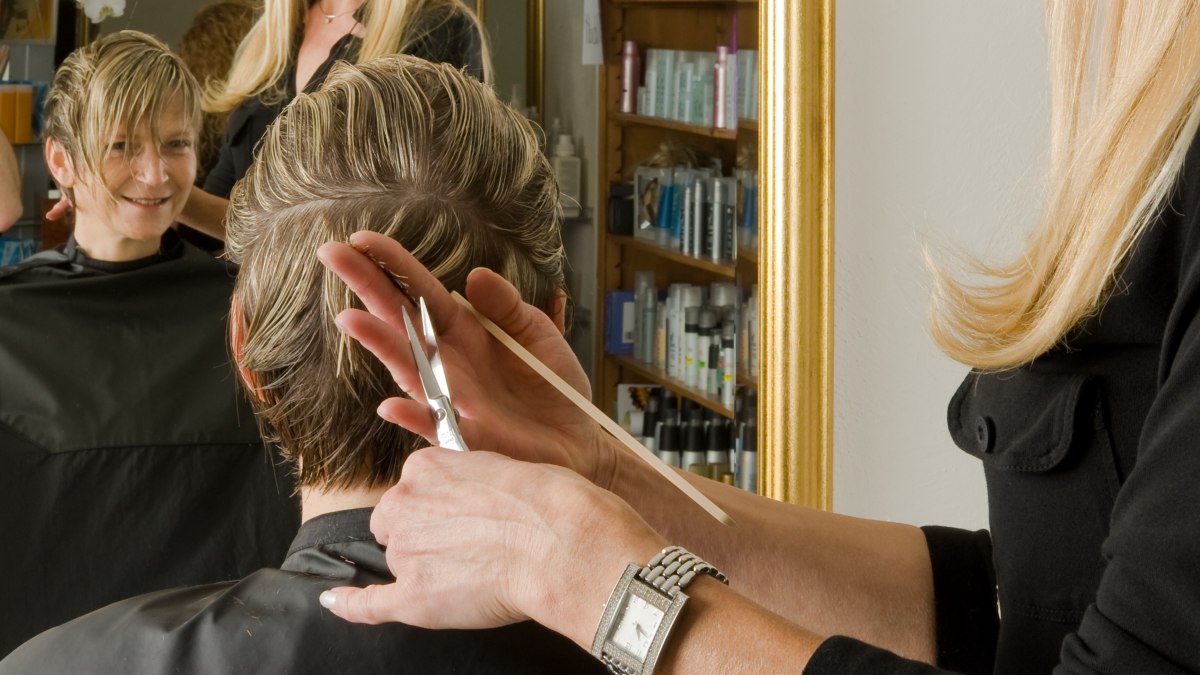
The description I found: It's a short, edgier twist on layers that give more volume. Hair that's too thick ends up looking like a mullet. Instead of cutting on top of the hair, pull up the top layer and cut shorter, more angular pieces underneath.
I don't fully understand the directions here and have never heard of this! Could you expand more?
The basic idea is that the hair is layered in an almost reverse method. The hair on top of a particular section is cut so that the upper layers of the hair are longest, and the layers beneath are cut shorter. This gives more fullness to the hair, thus creating volume, while allowing the hair to be light and moveable. The effect creates panels of hair that seem to move independently, hence, the term "paneling".
The actual concept is achieved in a variety of subtly different ways, but the general principle of longer lengths to the top of the section is what's appropriate here.
In some cases, paneling is used to create hairstyles that can be styled in one fashion to look very mainstream and traditional. These styles can be parted in a different location to reveal a completely different, much wilder cut hidden within the style.
©Hairfinder.com
See also:
Can you explain the terms square, round, concave, and convex layers?
How to cut jagged layers
How to cut uniform layers